
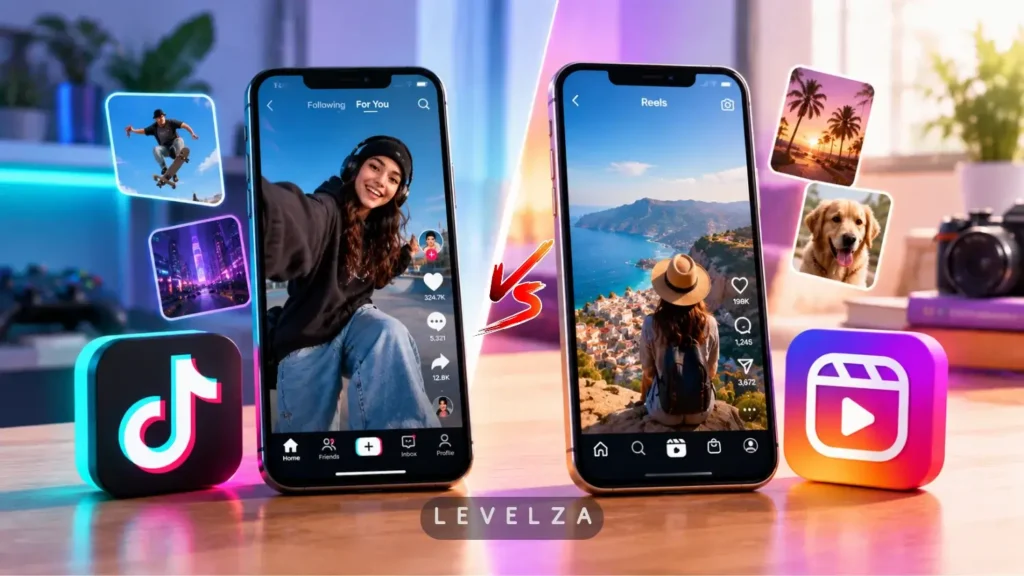


The TikTok vs Instagram Reels question looks simple because both apps serve a full-screen vertical video feed. The similarity ends at the screen, since the systems underneath are built on opposite ideas.
TikTok is an interest-first discovery engine that ranks videos by how long people actually watch them. Instagram Reels is a video layer attached to an existing follower network, a photo grid, and a private messaging graph.
Shallow comparisons conclude that both are great for video and stop there. They skip audio licensing limits, cold-audience reach, and how creator payouts are structured. This LEVELZA comparison evaluates recommendation mechanics, upload behavior, creator economics, and desktop tooling based on documented platform behavior.
QUICK VERDICT
Verdict: Situational. Neither platform wins outright, and the better choice depends on whether the goal is reaching strangers or serving an existing audience.
TikTok dominance: Organic cold discovery, sound-driven trend mechanics, and native live broadcasting infrastructure.
Instagram Reels dominance: A multi-format presence across Stories, carousels, and direct messaging, unified brand advertising, and direct paths from viewer to client.
TikTok vs Instagram Reels: Head-to-Head Comparison Matrix
| Feature / Dimension | TikTok | Instagram Reels | LEVELZA Analysis & Verdict |
|---|---|---|---|
| Core Recommendation Engine | Watch-time-weighted recommendation system (the For You Page). Follower count carries little weight for new uploads. | Hybrid of follower-graph and interest signals. Engagement from existing followers influences how widely a Reel is shown. | TikTok Wins. New accounts with no audience get far better cold reach, because the first test audience is not built from followers. |
| Audio Ecosystem & Licensing | Large commercial and user-generated sound library, with granular audio trimming and community remixing. | Commercial music library through Meta’s licensing partnerships. Business accounts generally see a narrower catalog. | TikTok Wins. Every sound links to a page of videos using it, and that attribution loop drives trend formation more effectively than Instagram’s audio pages. |
| Integrated Multi-Format Publishing | Video-first, with photo carousels and text posts added later. | Reels, Stories, grid photos, carousels, and live video under one account. | Instagram Reels Wins. Brands and creators who need several content types get far more utility from a single Instagram profile. |
| Direct Messaging & Community CRM | One-on-one and group chat, with tighter filters on messages from non-mutual contacts and younger users. | Deeply integrated messaging with business tools such as saved replies and voice notes. | Instagram Reels Wins. Social commerce, client onboarding, and follow-up conversations run more naturally through Instagram’s inbox. |
| E-Commerce & Monetization Tools | TikTok Shop marketplace, LIVE gifting, and the Creator Rewards Program based on watch-time metrics. | Creator Marketplace, brand sponsorship tags, and Instagram Shop integrations. Platform-funded view bonuses are largely discontinued or limited by region. | Tie / Situational. TikTok leads on in-feed shopping and live gifting, while Instagram leads on high-value sponsored brand partnerships. |
| Desktop Web & Creation Suite | Installable PWA, a web upload portal with scheduling, and the standalone TikTok LIVE Studio on Windows. | Web portal for basic Reels uploads and messaging, without a native multi-scene live broadcast tool. | TikTok Wins. Streamers and creators batch-uploading master files get a more complete desktop workflow. |
The matrix splits three wins for TikTok, two for Instagram Reels, and one situational result. The wins carry different weight depending on the goal. Discovery dominates for a creator starting from zero, while messaging and format range dominate for an established brand.
Core Mechanics & Feature Differences
The matrix states the differences. The sections below explain why they exist and what they mean in practice.
Algorithmic Distribution: Retention Loops vs. Social Proof
TikTok treats every new upload as a fresh experiment. The video is shown to a small cold test audience, and the system measures completion rate, loop rate, and share ratio regardless of the creator’s follower count.
If those signals beat the benchmark for similar videos, distribution widens in stages. If they fall short, the video stalls early, which is why a strong opening and a clean ending matter more than account history.
Loop rate deserves particular attention. A clip that ends where it began invites a rewatch, and each rewatch counts as a positive signal.
Instagram Reels starts from a different place. Reported platform behavior indicates that engagement from an account’s existing active followers weighs heavily before a Reel reaches the public Reels exploration feed.
The practical result is that account momentum counts alongside the video itself. A creator with an engaged following starts with a larger launch pad, while a new account has to earn early engagement before wider distribution follows.
Both systems now weigh watch time and shares, so the gap is narrower than older comparisons claim. The remaining difference is how much the existing audience gates the first round of reach.
Content Creation Suites: Sound-Centric Remixing vs. Visual Curation
TikTok’s creation tools are built around response and repetition. Duet, Stitch, and sound-sync templates let one creator’s idea become a chain of reactions, and each link in that chain feeds more related content into the recommendation system.
The editor favors speed and trend participation. A creator can find a track, apply a template, and publish without leaving the app, which suits the platform’s pace.
Instagram Reels leans toward visual polish. Its filters and color grading tend to suit lifestyle and aesthetic content, and its workflow connects more naturally with outside design tools such as Canva and Adobe products.
Instagram offers its own response formats, but they sit beside Stories, carousels, and grid posts instead of anchoring the creation flow. The result is a toolset that serves a curated, brand-consistent look better than it serves rapid trend-chasing.
Audio licensing adds a constraint on both sides. Commercial and business accounts on either platform are generally limited to cleared music catalogs, so brand creators should confirm which tracks are available before building a video around one.
Platform Availability & Desktop Workflows
Both apps run lightweight clients on Android and iOS, and neither demands unusual hardware. The difference shows up over time. TikTok’s persistent media cache tends to grow faster with heavy use and benefits from periodic clearing through Profile > Settings and privacy > Free up space > Clear Cache, which leaves unpublished drafts intact.
Desktop is where the two platforms separate most clearly. TikTok offers an installable Progressive Web App, a web upload portal with scheduling, and TikTok LIVE Studio, a dedicated Windows client for streaming with multiple sources.
Instagram’s web interface is oriented toward browsing, messaging, and manual posting. Reels can be uploaded from a computer, but scheduling and native multi-scene streaming are not part of the standard web experience as documented.
For creators who finish their edits in a desktop video editor, TikTok’s route involves fewer steps between a finished master file and a scheduled post. For people whose work lives in direct messages and Stories, the phone remains the main tool on both platforms.
Monetization, Creator Economics & Commerce
Both apps are free to install and use. The economics here concern creator income, not subscription pricing.
TikTok’s native monetization is the more structured of the two. The Creator Rewards Program pays creators directly, with payouts tied to qualified views of longer videos, revenue-per-view metrics, and completion rates. Real-time virtual gifting in LIVE streams and TikTok Shop affiliate commissions add further income streams.
Eligibility and availability for these programs vary by region and account requirements, so creators should check their own account before planning around them. The revenue potential can be strong for qualified longer-form content, but it is gated.
Instagram has largely moved away from algorithmic view bonuses. Income now leans on creator-brand matchmaking, affiliate product tagging, and funnels that route interested viewers into direct messages, where automated replies can handle early sales conversations.
The contrast is predictability versus ceiling. TikTok offers a more reliable platform-funded stream for creators who qualify, while Instagram income depends on direct brand agreements, which are more variable but can be larger per deal.
Commerce follows the same split. TikTok Shop keeps checkout inside the feed, while Instagram usually moves the buyer from a product tag or a message thread toward purchase.
PRO TIP — Repurpose Without the Watermark Penalty
Cross-posting is the most common way creators lose reach on Instagram. Meta has said its recommendation system deprioritizes videos that carry visible watermarks or logos from other apps, so a Reel exported from TikTok with its watermark intact is handicapped before anyone sees it.
Keep a clean master file from your video editor and export it without any platform branding. Upload that file natively to each app instead of saving from one and re-posting to the other.
Choose audio from each platform’s own library, or use licensed audio baked into the master, to avoid copyright muting. Check that captions sit clear of each app’s interface overlays, because the two layouts place buttons differently.